

In our fast-paced, overstimulated lives, finding moments of peace and clarity can feel like a luxury. But what if a few minutes of mindful breathing could bring balance to your mind, energy to your body, and calm to your emotions? Welcome to the healing power of Nadi Shodhana Pranayama—also known as Alternate Nostril Breathing. This ancient yogic practice is more than just a breathing technique—it’s a powerful tool to cleanse your inner energy channels, calm your nervous system, and align your body, mind, and soul.
Let’s explore how Nadi Shodhana Pranayama can become your go-to ritual for detoxifying stress, enhancing mental clarity, and experiencing inner peace like never before.
Nadi Shodhana, or alternate nostril breathing, is a yogic practice that involves breathing through one nostril at a time in a specific pattern. This technique is thought to harmonize the Ida and Pingala nadis (energy pathways), soothe the mind, and enhance overall well-being.
Table of Contents
What is Nadi Shodhana Pranayama?
The term “Nadi Shodhana” comes from Sanskrit, where:
- Nadi means “channel” or “energy pathway”
- Shodhana means “purification”
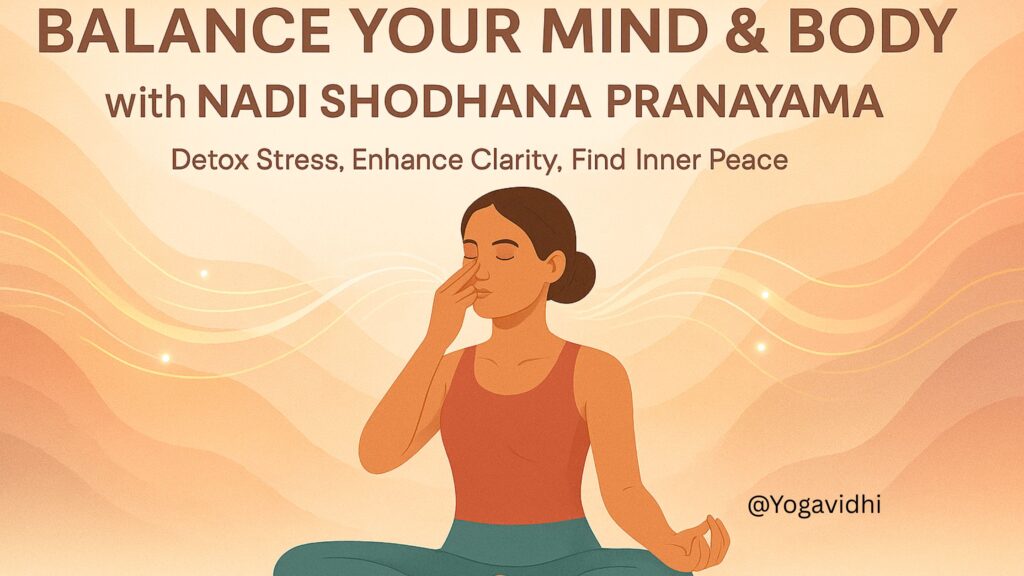
So, Nadi Shodhana Pranayama literally means the “cleansing of energy channels through breath regulation.” It is a powerful breathing exercise that involves alternating the breath between the left and right nostrils in a rhythmic manner, using specific hand gestures known as Vishnu Mudra.
Unlike regular deep breathing, alternate nostril breathing works to clear and balance the flow of prana (life force energy) through the Ida, Pingala, and Sushumna nadis—three major energy pathways in yogic philosophy.
The Purpose Behind Alternate Nostril Breathing
In yoga, energy flow is just as important as blood flow. When your energy pathways are blocked, you may experience stress, fatigue, lack of focus, or emotional imbalance. Nadi Shodhana Pranayama acts like a deep internal cleanse, purifying these energy channels and harmonizing the two hemispheres of the brain.
- The left nostril (Ida nadi) is linked to calming, cooling energy.
- The right nostril (Pingala nadi) is associated with active, heating energy.
By alternating breath between them, you naturally bring both balance and awareness into your system.
Key Benefits of Nadi Shodhana Pranayama
Practicing Nadi Shodhana Pranayama daily can have a profound impact on your physical, mental, and emotional well-being. Let’s break down its multi-layered benefits:
1. Detoxifies the Mind and Body
This breathing technique boosts oxygen flow, enhances circulation, and helps flush out toxins from your respiratory and nervous systems. It acts like an inner cleanse that leaves you feeling lighter and refreshed.
2. Reduces Stress and Anxiety
One of the top reasons people turn to pranayama is for relief from anxiety. Nadi Shodhana Pranayama activates the parasympathetic nervous system, promoting relaxation and reducing cortisol levels—your stress hormone.
3. Enhances Mental Clarity and Focus
When your energy channels are balanced, your mind becomes clearer and sharper. Alternate nostril breathing boosts oxygenation to the brain, improving concentration, decision-making, and creativity.
4. Balances Emotional Energy
If you often feel emotionally overwhelmed, practicing Nadi Shodhana can help you restore emotional stability. It’s especially helpful for managing mood swings, anger, and irritability.
5. Supports Better Sleep
Many people struggle with falling asleep due to racing thoughts or anxiety. Practicing Nadi Shodhana Pranayama before bed can calm your mind and prepare your body for restful sleep.
6. Improves Respiratory Function
This technique strengthens lung capacity, helps regulate breath patterns, and can be particularly beneficial for people with asthma or sinus issues.
How to Practice Nadi Shodhana Pranayama (Step-by-Step Guide)
Even if you’re a complete beginner, this breathing practice is easy to learn and can be done in just a few minutes a day.
Preparation
- Find a quiet space where you can sit comfortably.
- Sit in a cross-legged position or on a chair with a straight spine.
- Rest your left hand on your knee in Chin Mudra.
- Use your right hand to form Vishnu Mudra (fold the index and middle fingers toward the palm, use the thumb and ring finger to close nostrils).
Step-by-Step Instructions
- Close your right nostril with your thumb and inhale slowly through your left nostril.
- Close your left nostril with your ring finger and exhale through your right nostril.
- Inhale through your right nostril, then close it.
- Exhale through your left nostril.
- This completes one round. Continue for 5–10 minutes.
Tips for Best Results
- Keep your breath smooth, gentle, and quiet.
- Focus your attention on your breath.
- Practice on an empty stomach, preferably in the morning or before meditation.
Read More: Pranayama: Harness the Power of Breath for Health, Clarity, and Inner Peace
Read More: Yoga for Fat People: Embrace Wellness at Every Size
Precautions and Contraindications
Although Nadi Shodhana Pranayama is generally safe, it’s important to follow certain precautions:
- Avoid if you have a cold or severe nasal congestion.
- Don’t force your breath—stay relaxed and natural.
- Pregnant women and people with high blood pressure should consult a yoga expert or doctor.
- Beginners should start with 5 minutes and gradually increase duration.
Scientific Support Behind Nadi Shodhana
Modern science is increasingly validating what yogis have known for centuries. Research shows that alternate nostril breathing significantly:
- Reduces heart rate and blood pressure
- Improves heart rate variability (HRV), a key stress indicator
- Enhances cognitive function and memory
- Reduces symptoms of anxiety and depression
A study published in the Journal of Clinical Psychology found that participants practicing Nadi Shodhana experienced a measurable reduction in anxiety scores after just two weeks.
Nadi Shodhana vs. Other Pranayama Techniques
With so many breathing practices in yoga, you might wonder: how does Nadi Shodhana Pranayama compare?
| Technique | Focus | Best For |
| Nadi Shodhana | Energy balance & stress relief | Daily balance, anxiety, meditation prep |
| Anulom Vilom | Mild variation of alternate breathing | Beginners, lung health |
| Kapalbhati | Fast exhalation | Detox, energy boost |
| Bhramari | Humming breath | Mental calm, insomnia, tension relief |
Nadi Shodhana stands out for its ability to harmonize subtle energies, making it ideal before meditation or when seeking inner balance.
Integrating Nadi Shodhana into Your Daily Routine
The beauty of Nadi Shodhana Pranayama is in its simplicity. Here’s how to make it part of your daily life:
- Morning: Start your day with 5–10 minutes to set a balanced tone.
- Midday: Use it during stressful moments to reset your nervous system.
- Evening: Practice before meditation or sleep to unwind.
- Yoga Practice: Use it before or after asana practice to enhance prana flow.
Conclusion: Breathe Better, Live Better
In the midst of deadlines, distractions, and daily chaos, your breath is your anchor. With just a few minutes of Nadi Shodhana Pranayama each day, you can detoxify your system, quiet your mind, and return to your natural state of balance and well-being.
This simple yet profound technique is more than a yoga practice—it’s a lifeline to clarity, calm, and inner peace. If you’re seeking a sustainable, natural way to manage stress, enhance your focus, and improve your overall health, start with your breath. Start with Nadi Shodhana Pranayama.
Common FAQs About Nadi Shodhana Pranayama:
Q. Can I do Nadi Shodhana on a full stomach?
Ans: It’s best practiced on an empty stomach, ideally in the morning or at least 2 hours after a meal.
Q. How long should I practice each day?
Ans: Start with 5 minutes and gradually build up to 15–20 minutes for maximum benefits.
Q. Can children or seniors practice this technique?
Ans: Yes, it is gentle and safe for most age groups. Just ensure they’re breathing comfortably without strain.
Q. Is Nadi Shodhana good for insomnia?
Ans: Absolutely. Practicing before bed can calm the nervous system and help you fall asleep faster.
Q. Do I need to count or hold the breath?
Ans: As a beginner, just focus on a steady inhale-exhale rhythm. Advanced variations may include breath retention (kumbhaka), but it’s optional.
Q. What is Nadi Shodhana pranayama?
Ans: In Sanskrit, it’s known as nadi shodhana pranayama. This translates as “subtle energy clearing breathing technique.” This type of breathwork can be done as part of a yoga or meditation practice. Alternate nostril breathing can also be done as its own practice to help you quiet and still your mind.
Q. What is the origin of Nadi Shodhana?
Ans: Alternate nostril breathing, known as Nadi Shodhana, has its roots in the ancient Indian yogic traditions outlined in the Yoga Sutras and is recognized as a technique for harmonizing the mind and body.
Q. What are the benefits of Nadi Shodhana pranayama spiritually?
Ans: It clears the mind, enhances concentration, and boosts vitality. It also reduces stress and anxiety while balancing the body’s energy. Additionally, it removes pranic blockages and harmonizes the Ida and Pingala nadis, encouraging the flow of Sushumna, which leads to deeper meditation and spiritual awakening.
Q. Who should not do Nadi Shodhana?
Ans: Alternate nostril breathing is safe for everyone to practice, except for individuals with high blood pressure or hypertension—who should avoid breath retention during the practice. Other than that, there are no contraindications.
Declaration Note:
We use third-party videos and images on https://yogavidhi.com/ for educational and illustrative purposes. All rights belong to their respective owners. No copyright infringement is intended.