
Yoga is often seen as a set of physical postures, but its true essence goes far beyond flexibility or strength. At its heart, yoga is a philosophy of life — a holistic path that helps us live in harmony with ourselves, others, and the universe. One of the core pillars of this philosophy is the Yamas, the first limb of Patanjali’s Ashtanga Yoga.
The Yamas are not merely moral codes; they are guiding principles for leading a meaningful, mindful, and compassionate life. They shape how we relate to the world around us and help us cultivate inner peace and ethical clarity. Whether you are a yoga practitioner or simply someone seeking balance in modern life, understanding and practicing the Yamas in yoga can transform your journey inside and out.
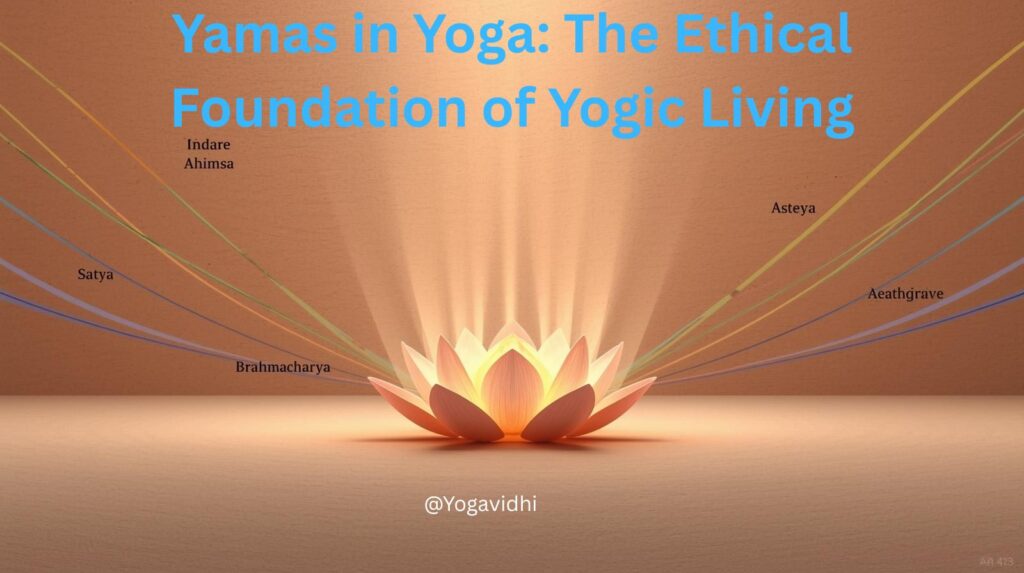
In yoga, the Yamas are the first of Patanjali’s Eight Limbs of Yoga, serving as five ethical principles and moral restraints that lay the groundwork for a righteous life. These include Ahimsa (non-violence), Satya (truthfulness), Asteya (non-stealing), Brahmacharya (self-restraint or moderation), and Aparigraha (non-possessiveness or non-greed). Together, they guide one’s behavior toward others and help cultivate inner discipline, harmony, and spiritual strength.
Table of Contents
What Are the Yamas in Yoga?
The word Yama comes from Sanskrit, meaning “restraint” or “discipline.” In Patanjali’s Yoga Sutras, the Yamas are described as universal vows — moral and ethical foundations that purify our interactions and make us more conscious beings.
They are the first step in the Eight Limbs of Yoga (Ashtanga Yoga), followed by Niyama, Asana, Pranayama, Pratyahara, Dharana, Dhyana, and Samadhi. While Asanas (poses) work on the physical body, the Yamas nurture emotional and ethical awareness, helping us live with purpose and peace.
Yamas and the Eight Limbs of Yoga
Before diving deeper, it’s important to understand where the Yamas fit within yoga’s broader system. Patanjali’s Ashtanga Yoga outlines an eightfold path that serves as a blueprint for spiritual evolution.
These eight limbs are:
- Yama – Ethical disciplines
- Niyama – Personal observances
- Asana – Physical postures
- Pranayama – Breath control
- Pratyahara – Withdrawal of the senses
- Dharana – Concentration
- Dhyana – Meditation
- Samadhi – Enlightenment or union
The Yamas in yoga are placed first because ethical behavior forms the bedrock of any spiritual practice. Without moral discipline and inner integrity, even advanced postures or meditation will not lead to lasting peace.
The Five Yamas: The Path to Ethical Living
Patanjali defines five Yamas in yoga, each representing a principle that helps refine our relationships with the outer world. These five Yamas are:
- Ahimsa (Non-violence)
- Satya (Truthfulness)
- Asteya (Non-stealing)
- Brahmacharya (Moderation or control of energy)
- Aparigraha (Non-possessiveness)
These are not rigid rules but gentle reminders to live consciously and compassionately. Let’s explore them one by one.
1. Ahimsa (Non-Violence) – The Spirit of Compassion
The first and most fundamental Yama in yoga is Ahimsa, meaning non-violence. It extends beyond physical harm — it includes our thoughts, emotions, speech, and actions.
Practicing Ahimsa means choosing compassion over cruelty, understanding over judgment, and love over anger. It encourages us to be kind not just to others but to ourselves. Negative self-talk, guilt, or self-criticism are subtle forms of violence that drain our inner peace.
Ahimsa in daily life:
- Speak gently and avoid gossip.
- Eat consciously — many yogis adopt vegetarianism as part of Ahimsa.
- Replace judgment with empathy.
- Practice self-compassion in failures and struggles.
When we cultivate non-violence, our relationships flourish, our hearts soften, and our minds become tranquil.
2. Satya (Truthfulness) – Living with Authenticity
The second Yama in yoga, Satya, translates to truthfulness. It encourages us to live in alignment with our inner truth. But Satya is not just about speaking the truth — it is about being authentic in thoughts, emotions, and actions.
True Satya requires courage. It means being honest about our feelings, admitting our mistakes, and making choices that reflect integrity. However, Patanjali reminds us that Satya should always align with Ahimsa. Speaking truth should never cause harm.
Practicing Satya daily:
- Communicate honestly but kindly.
- Honor your intuition and values.
- Avoid false pretenses or people-pleasing.
- Be truthful in commitments and promises.
Living with authenticity brings immense freedom. It clears inner conflicts and helps us live from a place of peace and integrity.
Read More: Yoga for Diabetes: Natural Poses, Breathing Techniques, and Lifestyle Tips to Balance Blood Sugar
Read More: Anulom Vilom Pranayama: The Ancient Yogic Breathing Technique for Balance, Health, and Inner Calm
3. Asteya (Non-Stealing) – Cultivating Contentment
The third Yama, Asteya, means non-stealing. While it literally forbids taking what doesn’t belong to us, its deeper meaning includes not stealing time, energy, ideas, or opportunities from others — or even from ourselves.
In modern life, we often “steal” unconsciously: comparing ourselves with others, taking credit for others’ work, or wasting our own time on distractions. Practicing Asteya is about contentment and gratitude for what we already have.
Asteya in practice:
- Respect others’ boundaries and efforts.
- Appreciate your unique gifts without comparison.
- Use resources responsibly.
- Be punctual — honor others’ time.
Asteya helps us live abundantly. When we let go of envy and greed, we create space for joy and genuine fulfillment.
4. Brahmacharya (Moderation or Right Use of Energy)
The fourth Yama, Brahmacharya, is often misunderstood. Traditionally, it referred to celibacy, but in modern yoga, it means moderation and wise use of energy.
Our energy is precious — mental, emotional, and physical. Brahmacharya teaches us to channel it toward growth and higher consciousness rather than scattering it through indulgence or distraction.
How to practice Brahmacharya:
- Maintain balance between work, rest, and pleasure.
- Avoid overindulgence in food, social media, or material desires.
- Focus energy on creativity, learning, or spiritual practice.
- Cultivate mindful awareness in relationships.
By conserving and directing energy purposefully, we become more focused, calm, and spiritually alive.
5. Aparigraha (Non-Possessiveness) – Letting Go of Attachment
The final Yama, Aparigraha, means non-possessiveness or non-greed. It reminds us that attachment — to material things, relationships, or even beliefs — can create suffering.
When we cling too tightly, we create fear of loss. Aparigraha teaches the art of letting go, trusting life’s flow, and embracing simplicity.
Aparigraha in everyday life:
- Declutter your surroundings — embrace minimalism.
- Let go of emotional baggage and grudges.
- Practice generosity and gratitude.
- Be open to change rather than resisting it.
Freedom comes when we stop defining happiness by possessions. Practicing Aparigraha leads to peace, self-reliance, and emotional liberation.
| Aspect | Description |
| Philosophical Source | Patanjali’s Yoga Sutras – Part of the Eight Limbs of Yoga (Ashtanga Yoga) |
| Purpose of Yamas | To guide ethical behavior and build harmony between self and society |
| Spiritual Benefits | Purifies the mind, promotes peace, and prepares for meditation and higher consciousness |
| Daily Integration Tips | Journaling, mindfulness, setting daily intentions, living consciously |
| Core Message | Practicing Yamas transforms yoga from a physical exercise into a holistic, ethical, and spiritual way of life |
Integrating the Yamas into Daily Life
Practicing Yamas in yoga is not limited to the yoga mat. It’s about transforming your entire lifestyle into one of mindfulness and awareness.
Simple ways to live the Yamas daily:
- Begin your day with self-reflection or journaling.
- Meditate on one Yama each week.
- Notice your thoughts — replace judgment with kindness.
- Set intentions aligned with your values.
- Practice yoga and pranayama mindfully.
Consistency is key. Small, conscious actions every day bring deep, lasting transformation.
The Relevance of Yamas in Modern Society
In today’s fast-paced, material-driven world, the Yamas offer timeless wisdom. They remind us to slow down, live consciously, and act from compassion.
Imagine a world where people practiced honesty, non-violence, moderation, and non-attachment — relationships would thrive, stress would reduce, and communities would become more peaceful and sustainable.
Professionally, the Yamas promote ethical leadership, teamwork, and mindful communication. Personally, they bring emotional balance and mental clarity.
The Deeper Spiritual Dimension of Yamas
Beyond ethics, the Yamas in yoga are spiritual practices that prepare the mind for higher states of awareness. When the outer world becomes harmonious, the inner world naturally turns serene.
Through Yamas, we overcome ego-driven habits, release fear, and connect with our higher self. They create the foundation for meditation (Dhyana) and ultimately Samadhi, the blissful state of unity.
In essence, practicing Yamas is not about perfection — it’s about progress. Each act of kindness, honesty, or detachment brings you closer to inner freedom.
Conclusion: Living the Yamas – The True Path of Yoga
The Yamas in yoga are not outdated moral codes — they are powerful, practical tools for modern living. When you embody non-violence, truthfulness, non-stealing, moderation, and non-attachment, you align your life with integrity and harmony.
Practicing the Yamas transforms yoga from a physical workout into a soulful journey — a way of life that awakens compassion, clarity, and inner joy.
“Yoga is not about touching your toes; it’s about what you learn on the way down.”
— Jigar Gor
Start with one Yama today. Choose Ahimsa in your words, Satya in your truth, or Aparigraha in letting go. Each small act leads you closer to the peace that yoga truly promises — the peace that comes from living in alignment with your highest self.
Frequently Asked Questions (FAQs):
Q. What are the Yamas in yoga philosophy?
Ans: The Yamas are ethical principles outlined in Patanjali’s Yoga Sutras. They guide how we interact with the world and form the moral foundation of yoga practice.
Q. How do Yamas influence daily life?
Ans: Practicing Yamas encourages compassion, honesty, gratitude, and balance — qualities that lead to inner peace and harmonious relationships.
Q. What is the difference between Yamas and Niyamas?
Ans: Yamas focus on how we interact with the external world, while Niyamas are personal observances guiding self-discipline and inner growth.
Q. Can beginners practice Yamas without doing physical yoga?
Ans: Absolutely. The Yamas are universal values that anyone can practice, regardless of whether they perform yoga postures.
Q. Which Yama is most important in modern life?
Ans: All Yamas are essential, but Ahimsa (non-violence) and Aparigraha (non-attachment) are particularly relevant in today’s stressful, materialistic society.
Q. What is called yamas?
Ans: The term “Yamas” refers to the five ethical or moral restraints described in Hindu and Buddhist philosophies, particularly in the Yoga Sutras of Patanjali, where they form the first limb of yoga. In Sanskrit, yama translates to “restraint” or “self-control.” These five yamas serve as moral guidelines that shape our behavior toward ourselves and others, fostering harmony and minimizing suffering. They include Ahimsa (non-violence), Satya (truthfulness), Asteya (non-stealing), Brahmacharya (moderation), and Aparigraha (non-possessiveness).
Declaration Note:
We use third-party videos and images on https://yogavidhi.com/ for educational and illustrative purposes. All rights belong to their respective owners. No copyright infringement is intended.