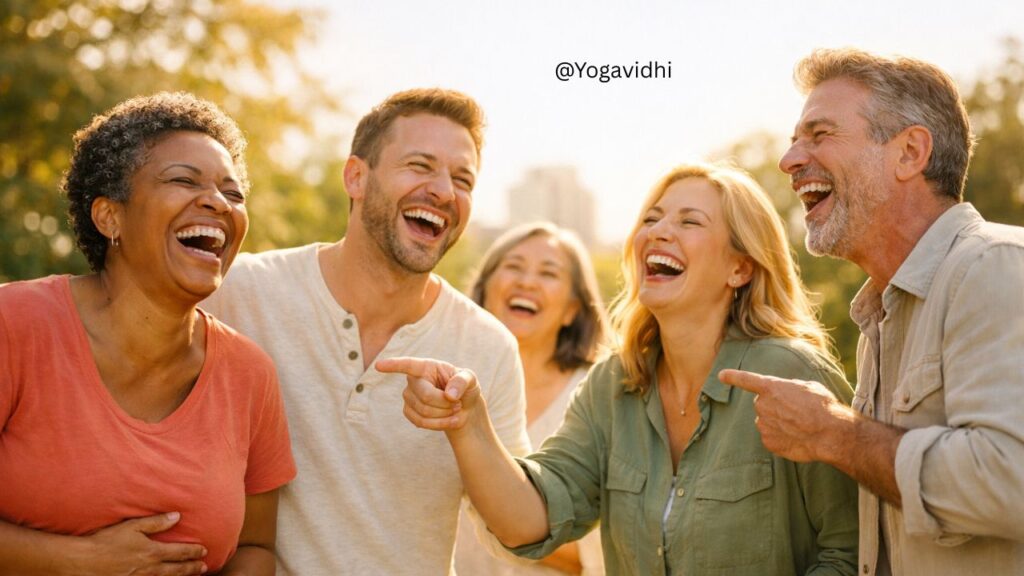

When was the last time you laughed without a reason? Not a polite smile. Not a social giggle. But a deep, uncontrollable, belly laugh that made your eyes water and your stress disappear.
In today’s fast paced world, stress, anxiety, and burnout have become part of daily life. This is where laughing yoga comes in. A simple yet powerful practice that combines intentional laughter with yogic breathing techniques to improve physical health, emotional well being, and mental clarity.
Also known as laughter yoga or laughter therapy, this practice has gained global recognition for its scientifically proven benefits. From boosting immunity to reducing stress hormones, laughing yoga is now practiced in over 100 countries.
In this detailed guide, we will explore:
- What laughing yoga is
- Its origin and philosophy
- The science backed benefits
- Popular laughing yoga exercises
- How to practice laughing yoga at home
- Why it may be the easiest wellness habit you ever start
If you are searching for a natural mood booster, stress relief yoga, or a fun way to improve your mental health, this might be exactly what you need.
Laughter yoga is a worldwide wellness practice created by Dr. Madan Kataria in 1995 that blends intentional laughter exercises with yogic breathing, or pranayama. It is based on the idea that self initiated laughter can deliver the same physical and psychological benefits as natural laughter, helping to lower stress, improve oxygen flow, and stimulate the release of endorphins.
Table of Contents
The Origin of Laughing Yoga
Laughing yoga was founded in 1995 by Dr. Madan Kataria, a medical doctor from Mumbai. What began as a small gathering of five people in a park has now grown into a global wellness movement.
Dr. Kataria discovered through research that the body cannot differentiate between real and simulated laughter. As long as you are willing to laugh intentionally, the physiological benefits are the same.
This insight led to the creation of structured laughter yoga exercises, which combine:
- Intentional laughter
- Deep breathing techniques or pranayama
- Clapping rhythms
- Eye contact and playfulness
Today, laughing yoga is supported worldwide through Laughter Yoga International, with thousands of laughter clubs promoting community well being.
What Is Laughing Yoga?
Laughing yoga is a unique practice that blends voluntary laughter with deep yogic breathing. Unlike traditional yoga, it does not focus on complex postures. Instead, it focuses on joy, oxygenation, and emotional release.
The core principle is simple.
You do not need a reason to laugh.
At first, laughter may feel forced. But through eye contact and playful exercises, it soon becomes genuine and contagious.
Why Does It Work?
The body responds to laughter in a powerful way:
- Increases oxygen intake
- Releases endorphins
- Reduces cortisol which is the stress hormone
- Activates the parasympathetic nervous system
This is why laughing yoga is often recommended as:
- Yoga for stress relief
- Yoga for anxiety
- A natural mood booster
- Laughter therapy for emotional healing
The Science Behind Laughing Yoga
Modern research confirms what ancient yogis intuitively understood. Breath and emotion are deeply connected.
When you practice laughing yoga, you engage in deep diaphragmatic breathing. This improves oxygen supply to the brain and body. Increased oxygen enhances energy levels and mental clarity.
Key Scientific Benefits
- Reduces Stress and Anxiety
Laughter lowers cortisol and adrenaline, helping calm the nervous system. - Boosts Immunity
Studies show laughter increases natural killer cells, strengthening the immune system. - Improves Heart Health
Laughing increases blood circulation and improves vascular function. - Enhances Mood Naturally
Endorphins and serotonin are released during laughter, acting as natural antidepressants. - Strengthens Lungs
Deep laughter empties lungs of stale air, allowing fresh oxygen to enter.
The beauty of this yoga lies in its simplicity. It requires no equipment, no flexibility, and no prior yoga experience.
How a Typical Laughing Yoga Session Works
A standard laughing yoga session usually lasts 20 to 40 minutes. It typically includes the following components:
1. Clapping and Warm Up
Participants clap rhythmically while chanting
Ho Ho, Ha Ha Ha
This stimulates acupressure points in the hands and builds group energy.
2. Deep Breathing
Simple pranayama exercises help prepare the lungs.
3. Laughter Exercises
Structured activities such as greeting laughter, lion laughter, or silent laughter are performed.
4. Laughter Meditation
Unstructured, free flowing laughter begins naturally.
5. Grounding and Relaxation
The session ends with slow breathing and mindful relaxation.
The result is that participants feel lighter, happier, and energized.
Read More: Brahmacharya in Yoga: Meaning, Practice, Benefits, and Modern Relevance
Read More: Energy Control in Yoga: Meaning, Techniques, Benefits, and the Science of Mastering Prana
| Section | Key Details | Benefits |
| Definition of Laughing Yoga | A wellness practice combining intentional laughter with deep yogic breathing | Improves mood, reduces stress, increases oxygen supply |
| Founder and Origin | Created in 1995 by Dr. Madan Kataria in Mumbai, India | Global movement promoting community well being |
| Core Principles | Voluntary laughter, pranayama breathing, clapping rhythm, eye contact, playfulness | Emotional release and positive mindset |
| Scientific Basis | Reduces cortisol, increases endorphins, boosts immunity, improves circulation | Natural stress relief and immune support |
| Session Structure | Warm up clapping, deep breathing, laughter exercises, laughter meditation, relaxation | Energizes body and calms mind |
| Beginner Exercises | Greeting laughter, lion laughter, silent laughter, cell phone laughter, appreciation laughter | Builds confidence and positivity |
| Physical Benefits | Better lung capacity, improved heart health, stronger immune system | Increased energy and vitality |
| Mental Benefits | Reduces anxiety and depression, enhances focus, promotes clarity | Emotional balance and resilience |
| Social Benefits | Improves relationships, encourages bonding, boosts self confidence | Stronger community connection |
| Target Groups | Seniors, children, corporate employees, mental health support groups | Accessible and low impact wellness practice |
| Home Practice | 10 to 20 minutes daily, mirror practice, consistent routine | Sustainable self care habit |
| Comparison with Traditional Yoga | Focuses on laughter and breath rather than postures | Complements asana practice |
Top Laughing Yoga Exercises for Beginners
If you are wondering how to do laughing yoga at home, start with these beginner friendly techniques.
1. Greeting Laughter
Walk around and greet imaginary people with laughter instead of words.
2. Lion Laughter
Stick out your tongue, widen your eyes, and laugh loudly. This releases facial tension.
3. Silent Laughter
Open your mouth wide but laugh without sound. This strengthens facial muscles and improves emotional control.
4. Cell Phone Laughter
Pretend you are receiving hilarious news on your phone and burst into laughter.
5. Appreciation Laughter
Point at someone or yourself and laugh with appreciation.
Practicing these regularly enhances positivity and builds confidence.
Powerful Benefits of Laughing Yoga
Physical Benefits
- Improves lung capacity
- Boosts immunity
- Enhances oxygen supply
- Reduces blood pressure
- Increases energy levels
Mental Benefits
- Reduces anxiety
- Decreases symptoms of depression
- Improves focus and clarity
- Promotes emotional balance
Emotional and Social Benefits
- Builds stronger relationships
- Increases self confidence
- Breaks social barriers
- Encourages positivity
Many corporations now include laughing yoga in workplace wellness programs to reduce stress and improve team bonding.
Laughing Yoga for Different Age Groups
Laughing Yoga for Seniors
Improves mobility, boosts immunity, and reduces loneliness.
Laughing Yoga for Children
Enhances creativity and emotional expression.
Laughing Yoga for Corporate Employees
Reduces burnout and improves productivity.
Laughing Yoga for Mental Health
Supports therapy for anxiety and mild depression.
Because it is low impact and safe, laughing yoga is accessible to almost everyone.
Laughing Yoga vs Traditional Yoga
Traditional yoga often emphasizes postures or asanas, flexibility, and alignment.
Laughing yoga focuses on emotional release and breath control.
Both share:
- Deep breathing
- Mind body awareness
- Stress reduction benefits
They complement each other beautifully. Many practitioners combine morning asana practice with laughing yoga for emotional balance.
How to Practice Laughing Yoga at Home
If joining a laughter club is not possible, you can still practice laughing yoga at home.
Step by Step Guide
- Find a quiet space.
- Stand comfortably with relaxed shoulders.
- Begin with deep breathing.
- Start clapping and chanting rhythmically.
- Initiate gentle fake laughter.
- Maintain eye contact with yourself in a mirror.
- Continue for 10 to 15 minutes.
- End with slow breathing and gratitude.
Consistency matters more than intensity. Even 10 minutes daily can transform your mood.
Common Myths About Laughing Yoga
It feels fake
Even simulated laughter triggers real physiological benefits.
It is not real yoga
Breath control and mind body awareness make it a legitimate yogic practice.
It is only for extroverts
Introverts often benefit the most from structured emotional release.
You need a group
While group energy helps, solo practice is effective too.
Why Laughing Yoga Is So Powerful in Today’s World
We live in a time where chronic stress is normalized. Screens dominate attention. Genuine laughter is rare.
Laughing yoga reintroduces joy deliberately. It retrains the brain to choose positivity. It reminds the body how to relax naturally.
Unlike complicated wellness trends, laughing yoga is:
- Free
- Simple
- Accessible
- Evidence based
- Joyful
It does not require flexibility, strength, or expensive memberships. It requires only willingness.
Conclusion: Start Laughing, Start Healing
Laughing yoga is more than an exercise. It is a lifestyle shift. It is a reminder that happiness does not always require a reason.
Incorporating laughing yoga into your routine can:
- Reduce stress
- Improve immunity
- Boost mood
- Increase energy
- Strengthen emotional resilience
If you have been searching for laughter yoga benefits, yoga for stress relief, or natural ways to improve mental health, this is your sign to begin.
Stand up. Take a deep breath. Smile intentionally.
And start laughing, even if it feels silly at first.
Because sometimes, the simplest habits create the most profound transformations.
Frequently Asked Questions:
Q. Is laughing yoga scientifically proven?
Ans: Yes. Research shows laughter reduces stress hormones and boosts immune function.
Q. How long should I practice laughing yoga?
Ans: 10 to 20 minutes daily is effective.
Q. Can laughing yoga help anxiety?
Ans: Yes, it activates the relaxation response and reduces cortisol.
Q. Is it safe for seniors?
Ans: Generally yes, but individuals with severe heart conditions should consult a doctor.
Q. Can I practice laughing yoga alone?
Ans: Absolutely. Solo sessions are effective.
Q. Is laughing yoga a real thing?
Ans: Laughter Yoga is a research-backed method for enhancing physical, emotional, and mental health. By blending intentional laughter exercises with deep yogic breathing practices, it activates the body and mind in ways that traditional fitness or relaxation techniques often fail to achieve.
Declaration Note:
We use third-party videos and images on https://yogavidhi.com/ for educational and illustrative purposes. All rights belong to their respective owners. No copyright infringement is intended.