
In today’s fast paced world, most people complain about feeling low energy, mentally drained, emotionally overwhelmed, or spiritually disconnected. We drink more coffee, scroll more screens, and sleep less, yet still feel exhausted. Yoga offers a deeper solution: not just boosting energy, but mastering it.
Energy control in yoga is the ancient science of understanding, regulating, and directing your life force known as prana. It goes beyond physical exercise. It is about aligning breath, mind, and awareness to create balance, vitality, and inner power. In this comprehensive guide, you will discover what energy control in yoga truly means, how it works, the best techniques to practice, its scientific backing, and how you can integrate it into daily life for lasting transformation.
Energy control in yoga, also known as prana management, involves intentional practices that regulate, balance, and channel the body’s vital life force. By using pranayama (breathing techniques), bandhas (energy locks), and asanas (postures), practitioners enhance the flow of energy, increase vitality, sharpen concentration, and ease stress. Core techniques include Ujjayi breathing, Mula Bandha (root lock), and Nadi Shodhana.
Table of Contents
What Is Energy Control in Yoga?
At its core, energy control in yoga refers to the conscious regulation and direction of prana, the vital life force that flows through the body. According to yogic philosophy, prana is the subtle energy that sustains life. When prana flows freely, we experience clarity, vitality, emotional stability, and spiritual awareness. When blocked or imbalanced, we feel fatigue, anxiety or illness.
Yoga teaches that energy is not random. It moves through specific pathways called nadis and concentrates in energy centers known as chakras. Through breathwork or pranayama, postures or asanas, meditation, bandhas, and mudras, practitioners learn to balance and control this energy intentionally.
This is why traditional yoga is often described as a system for mastering the body, mind and energy, not just stretching muscles.
Understanding Prana: The Foundation of Yogic Energy
Before mastering energy control in yoga, it is essential to understand prana.
The Five Types of Prana or Pancha Prana Vayus
Yogic texts describe five major pranic forces:
- Prana Vayu, which governs inhalation and heart energy
- Apana Vayu, which controls elimination and grounding
- Samana Vayu, which manages digestion and internal balance
- Udana Vayu, which supports speech, growth, and upward energy
- Vyana Vayu, which circulates energy throughout the body
When these energies are balanced, the body functions harmoniously. Energy control in yoga works directly with these pranic currents to restore equilibrium.
Nadis and Chakras: The Subtle Energy Network
Nadis or Energy Channels
There are said to be 72,000 nadis, but three are most important:
Ida Nadi, associated with lunar, cooling, feminine energy
Pingala Nadi, associated with solar, heating, masculine energy
Sushumna Nadi, the central channel for spiritual awakening
When Ida and Pingala are balanced, energy flows through Sushumna, leading to heightened awareness and deep meditation.
The 7 Chakras
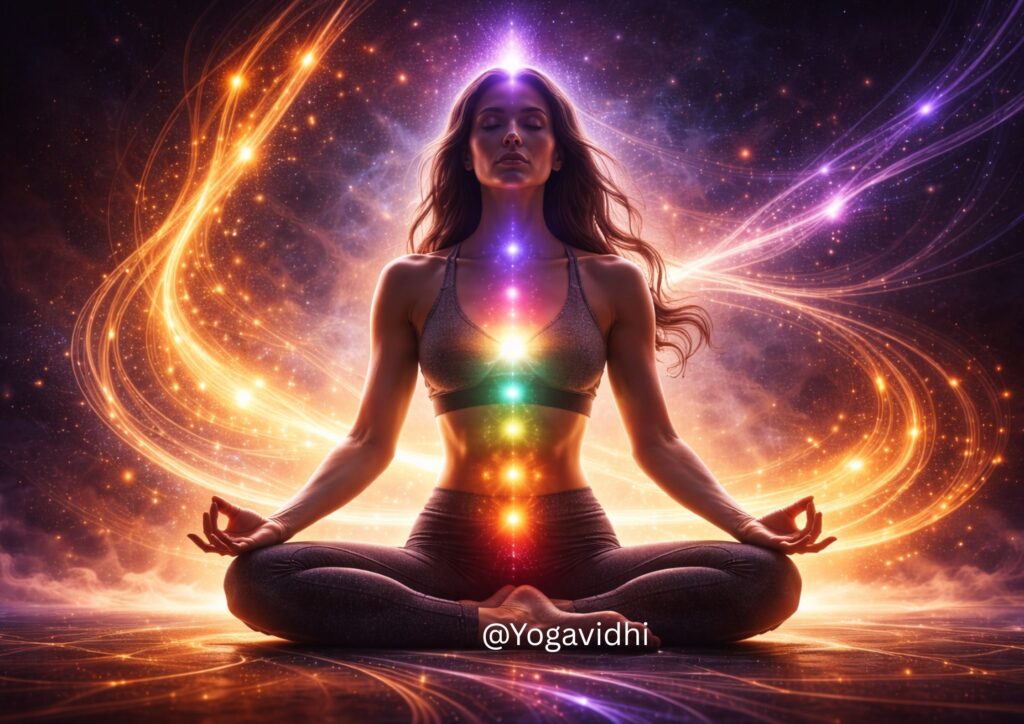
Energy control in yoga also involves balancing the seven chakras:
- Root or Muladhara, associated with stability
- Sacral or Svadhisthana, associated with creativity
- Solar Plexus or Manipura, associated with power
- Heart or Anahata, associated with love
- Throat or Vishuddha, associated with communication
- Third Eye or Ajna, associated with intuition
- Crown or Sahasrara, associated with spiritual connection
Blocked chakras can manifest as emotional imbalance or physical discomfort. Yogic energy practices help restore their flow.
Pranayama: The Science of Breath and Energy Control
If there is one core technique for energy control in yoga, it is pranayama.
Pranayama literally means extension or regulation of life force. By controlling the breath, you directly influence prana.
Why Breath Matters
Breathing is the bridge between conscious and unconscious systems. When you slow and deepen your breath:
The nervous system calms
Stress hormones reduce
Oxygen levels improve
Mental clarity increases
Modern research confirms that controlled breathing improves heart rate variability, reduces anxiety, and enhances cognitive focus.
Powerful Pranayama Techniques
Nadi Shodhana or Alternate Nostril Breathing balances Ida and Pingala nadis and is ideal for stress relief and mental clarity.
Kapalabhati is an energizing breath that detoxifies and activates the solar plexus chakra.
Bhastrika or Bellows Breath increases vitality and boosts metabolism.
Ujjayi Breath creates internal heat and focus during yoga practice.
Kumbhaka or Breath Retention is an advanced practice that intensifies energy expansion.
Regular pranayama practice is one of the most effective ways to master energy control in yoga.
Bandhas: The Yogic Energy Locks
Bandhas are subtle muscular locks that direct energy flow.
Mula Bandha or Root Lock activates the base chakra and prevents energy leakage.
Uddiyana Bandha or Abdominal Lock stimulates digestive fire and upward energy movement.
Jalandhara Bandha or Throat Lock regulates energy flow to the brain.
When combined, these locks help channel prana into the central energy channel and promote higher awareness.
Read More: Dharana Yoga for Stress Relief: A Beginner-Friendly Mindfulness Practice
Read More: Brahmacharya in Yoga: Meaning, Practice, Benefits, and Modern Relevance
| Category | Technique / Concept | Purpose in Energy Control in Yoga | Key Benefits |
| Foundation of Energy | Prana (Life Force) | Governs vital energy in the body | Vitality, balance, awareness |
| Five Prana Vayus | Prana, Apana, Samana, Udana, Vyana | Regulate different energy functions | Better digestion, circulation, grounding |
| Energy Channels | Ida, Pingala, Sushumna Nadis | Direct flow of subtle energy | Mental clarity, spiritual growth |
| Energy Centers | 7 Chakras | Store and distribute energy | Emotional balance, inner stability |
| Breath Control | Nadi Shodhana | Balances left and right energy channels | Stress relief, focus |
| Breath Control | Kapalabhati | Activates solar plexus energy | Increased metabolism, detoxification |
| Breath Control | Bhastrika | Boosts pranic flow | Energy boost, stamina |
| Breath Control | Ujjayi | Builds internal heat and awareness | Concentration, calm strength |
| Energy Locks | Mula Bandha | Prevents energy leakage | Stability, root chakra activation |
| Energy Locks | Uddiyana Bandha | Moves energy upward | Digestive power, vitality |
| Energy Locks | Jalandhara Bandha | Regulates upward energy | Nervous system balance |
| Mudras | Chin Mudra | Enhances meditation | Mental clarity |
| Mudras | Prana Mudra | Stimulates vitality | Increased energy levels |
| Asanas | Grounding Poses | Stabilize excess energy | Reduced anxiety |
| Asanas | Backbends | Activate heart and solar energy | Confidence, openness |
| Meditation | Chakra Meditation | Balances energy centers | Emotional healing |
| Advanced Practice | Kundalini Awakening | Raises dormant spiritual energy | Higher awareness |
| Daily Routine | 20 Minute Energy Flow | Maintains balanced energy | Sustainable vitality |
Mudras: Sealing and Directing Energy
Mudras are hand gestures or body seals that influence energy circuits.
Popular mudras for energy control in yoga include:
- Chin Mudra, which enhances meditation
- Prana Mudra, which boosts vitality
- Yoni Mudra, which encourages inner focus
- Khechari Mudra, an advanced spiritual practice
Though subtle, mudras can significantly shift energy patterns when practiced consistently.
Energy Control Through Asanas
While breath and meditation are central, yoga postures also play a crucial role in energy management.
Grounding Poses
Mountain Pose
Warrior II
Child’s Pose
These stabilize excess energy and calm anxiety.
Energizing Poses
Backbends
Sun Salutations
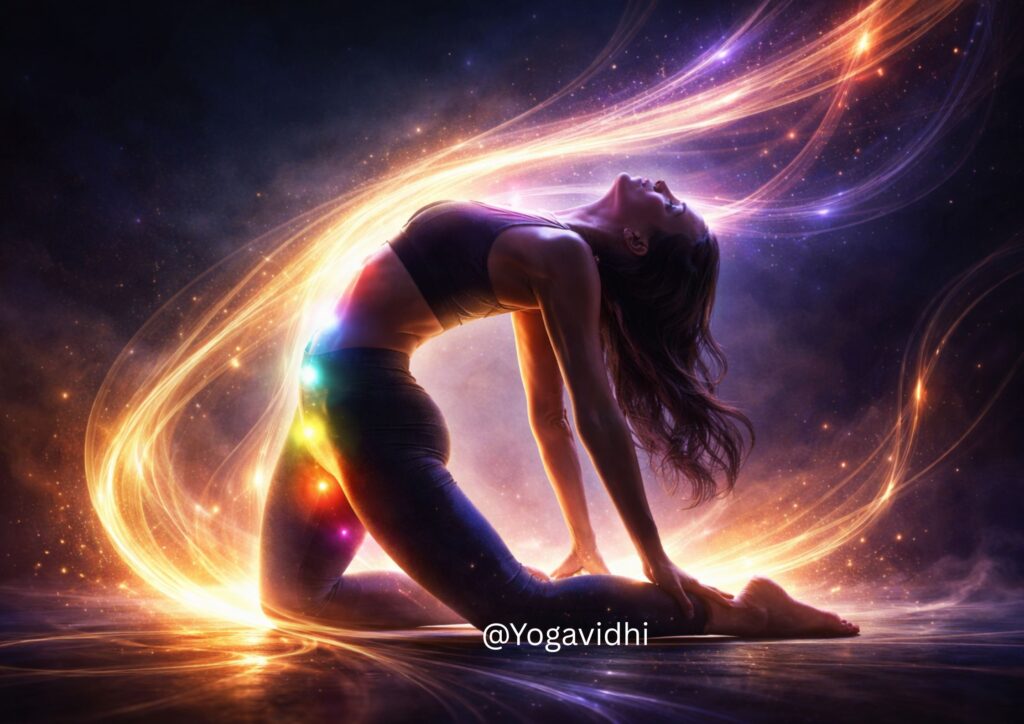
Camel Pose
They activate the heart and solar plexus chakras.
Calming Poses
Forward folds
Seated twists
Supine stretches
These release mental tension and reduce overactive energy.
The key to effective energy control in yoga through asanas is awareness. It is not about how flexible you are, but how consciously you move and breathe.
Kundalini and Higher Energy Awakening
Advanced yogic traditions speak of Kundalini, the dormant spiritual energy coiled at the base of the spine.
Through disciplined practice of pranayama, bandhas, meditation, and ethical living, this energy can rise through the chakras and lead to profound spiritual experiences.
However, it is important not to force this process. Energy control in yoga emphasizes gradual balance, not dramatic awakening.
The Scientific Perspective on Energy Control
While prana is a subtle concept, modern science supports many aspects of yogic energy practices.
Breathwork activates the parasympathetic nervous system and reduces stress.
Yoga influences cortisol, serotonin, and melatonin levels.
Meditation increases alpha and theta brainwaves, which are associated with calm focus.
Controlled breathing enhances respiratory function and oxygen efficiency.
Though science may not use the word prana, the physiological effects of energy control in yoga are measurable and powerful.
Benefits of Energy Control in Yoga
Practicing energy mastery consistently offers transformative benefits:
- Increased vitality and stamina
- Reduced stress and anxiety
- Improved concentration
- Emotional stability
- Better digestion and metabolism
- Balanced hormones
- Deeper meditation experiences
- Spiritual growth and clarity
When your energy is balanced, life feels less reactive and more intentional.
Common Mistakes to Avoid
While exploring energy control in yoga, be mindful of:
- Forcing breath retention
- Overdoing intense pranayama
- Ignoring grounding practices
- Practicing advanced techniques without guidance
Energy practices are powerful. Progress should be steady and conscious.
A Simple Daily Routine for Energy Balance
Here is a beginner friendly 20 minute sequence:
5 minutes Nadi Shodhana
5 rounds of Sun Salutation
2 minutes Mula Bandha awareness
5 minutes seated meditation
3 minutes deep relaxation
This short routine can dramatically improve energy levels and emotional balance.
Energy Control in Yoga for Modern Life
In the digital age, we constantly leak energy through stress, overthinking, and screen overload.
Yoga offers practical tools:
- Breathwork before meetings
- Grounding poses after long workdays
- Evening meditation for sleep
- Morning energizing pranayama
Instead of chasing productivity hacks, mastering energy gives you sustainable performance and inner peace.
Integrating Energy Awareness into Daily Living
Energy control in yoga is not limited to the mat. It includes:
- Mindful eating
- Balanced sleep
- Ethical living through Yamas and Niyamas
- Emotional awareness
- Conscious speech
When you observe how situations affect your energy, you gain power over your reactions.
Final Thoughts: The Art of Mastering Your Inner Power
Energy is the currency of life. Without balanced energy, even success feels exhausting. With controlled energy, ordinary moments feel extraordinary.
Energy control in yoga is not mystical. It is practical, transformative, and deeply empowering. It teaches you to conserve, balance, and elevate your life force intentionally.
Through pranayama, asanas, bandhas, mudras, and meditation, you gain access to a reservoir of vitality that no external source can provide.
Start small. Breathe consciously. Move with awareness. Sit in silence.
Over time, you will not just practice yoga. You will embody it.
And when you master your energy, you master your life.
FAQ:
Q. What is energy control in yoga?
Ans: Energy control in yoga refers to the practice of regulating and directing prana, the vital life force in the body. Through pranayama, meditation, asanas, bandhas, and mudras, practitioners balance their internal energy to improve physical vitality, mental clarity, and emotional stability.
Q. How does pranayama help with energy control in yoga?
Ans: Pranayama, or yogic breathing techniques, directly influences prana by controlling inhalation, exhalation, and breath retention. Practices like Nadi Shodhana, Kapalabhati, and Bhastrika help balance the nervous system, increase oxygen flow, and enhance overall energy levels.
Q. Can beginners practice energy control in yoga?
Ans: Yes, beginners can safely practice energy control in yoga by starting with simple techniques such as deep breathing, Nadi Shodhana, and basic meditation. Advanced practices like intense breath retention or Kundalini awakening should be learned under proper guidance.
Q. What are the benefits of mastering energy control in yoga?
Ans: Regular practice of energy control in yoga can improve focus, reduce stress and anxiety, boost stamina, balance hormones, support emotional health, and deepen meditation. It helps create a balanced flow of energy throughout the body.
Q. How long does it take to see results from energy control practices?
Ans: Many people notice improved calmness and mental clarity within a few weeks of consistent practice. However, deeper energetic balance and spiritual growth develop gradually over time with regular and mindful practice.
Q. How to control energy levels?
Ans: Eat regularly to help fight fatigue.
1. Stay physically active.
2. Maintain a healthy weight to improve energy levels.
3. Ensure you get quality sleep.
4. Manage stress to increase vitality.
5. Counseling or talking therapy can help reduce tiredness.
6. Limit caffeine intake.
7. Reduce alcohol consumption.
Declaration Note:
We use third-party videos and images on https://yogavidhi.com/ for educational and illustrative purposes. All rights belong to their respective owners. No copyright infringement is intended.