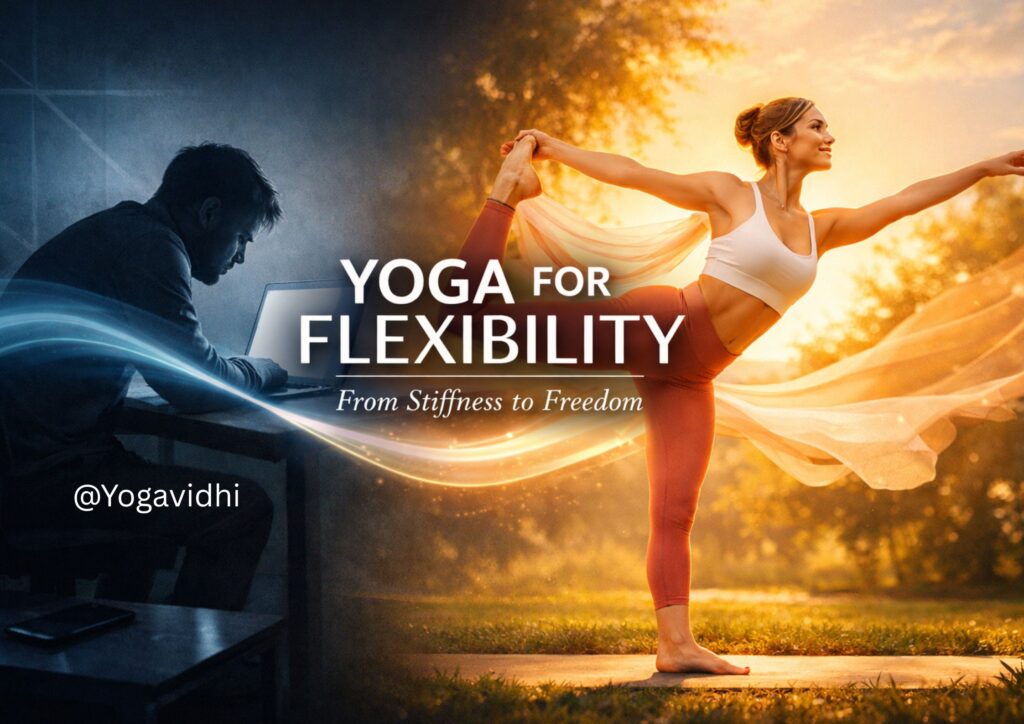

In today’s fast-paced world, most of us spend hours sitting at desks, in cars or glued to screens. Over time, this sedentary lifestyle leads to stiffness, poor posture, and reduced mobility. If you’ve ever struggled to touch your toes or felt tightness in your hips or shoulders, you’re not alone. This is where yoga for flexibility becomes a game-changer.
Unlike intense workouts that focus only on strength or endurance, yoga gently stretches and lengthens your muscles while calming your mind. It’s not just about becoming more flexible, it’s about moving freely, preventing injuries, and feeling better in your own body. Whether you’re a beginner or someone looking to deepen your practice, this guide will show you how yoga for flexibility can transform your body and overall well-being.
Yoga for flexibility enhances mobility and eases stiffness by combining gentle, consistent stretching with deep breathing, focusing on tight areas such as the hips, hamstrings, and shoulders. Effective practices, like Hatha or Yin yoga, involve holding poses for 30 seconds or longer to release tension and improve range of motion.
Table of Contents
What is Flexibility in Yoga?
Flexibility refers to the ability of your muscles and joints to move through their full range of motion. In yoga, flexibility is not just physical it’s also about mental openness and relaxation.
Flexibility vs Mobility
- Flexibility: Length of muscles
- Mobility: Control over joint movement
Yoga improves both simultaneously, making your movements smoother and more controlled.
The Role of Breath
Breathing plays a crucial role in yoga. Deep, mindful breathing helps relax muscles, allowing deeper and safer stretches. This is why yoga is far more effective than basic stretching routines.
Benefits of Yoga for Flexibility
Practicing yoga for flexibility regularly offers a wide range of physical and mental benefits:
1. Improves Range of Motion
Yoga gradually increases your ability to move joints freely, making everyday activities easier.
2. Reduces Muscle Stiffness
Tight muscles loosen over time, helping you feel lighter and more comfortable.
3. Prevents Injuries
Flexible muscles are less prone to strains and tears.
4. Enhances Posture
Yoga corrects imbalances, especially caused by long hours of sitting.
5. Boosts Blood Circulation
Stretching improves blood flow, delivering oxygen and nutrients to muscles.
6. Relieves Stress and Tension
Yoga combines movement with mindfulness, reducing stress levels significantly.
7. Supports Athletic Performance
Better flexibility leads to improved strength, balance, and endurance.
How Yoga Improves Flexibility
One of the biggest advantages of yoga for flexibility is its gradual and safe approach.
Gentle, Progressive Stretching
Yoga doesn’t force your body into extreme positions. Instead, it gently encourages muscles to lengthen over time.
Consistency is Key
You don’t need to be flexible to start yoga. With regular practice, your body adapts naturally.
Mind-Body Connection
Yoga trains you to listen to your body. This awareness prevents overstretching and injuries.
Importance of Warm-Up
Warming up prepares your muscles, making stretches more effective and safe.
Best Yoga Poses for Flexibility
Here are some of the most effective poses for improving flexibility:
Standing Poses
Forward Fold (Uttanasana)
- Stretches hamstrings and calves
- Relieves back tension
Triangle Pose (Trikonasana)
- Opens hips and stretches the spine
- Improves balance
Seated Poses
Seated Forward Bend (Paschimottanasana)
- Deep stretch for the back and hamstrings
- Calms the nervous system
Butterfly Pose (Baddha Konasana)
- Opens hips and inner thighs
- Improves lower body flexibility
Backbends
Cobra Pose (Bhujangasana)
- Opens chest and strengthens spine
Camel Pose (Ustrasana)
- Improves spinal flexibility
- Expands the chest and shoulders
Hip Openers
Pigeon Pose (Eka Pada Rajakapotasana)
- Deep hip stretch
- Releases emotional tension
Garland Pose (Malasana)
- Improves ankle and hip mobility
Twists & Spine Movements
Cat-Cow Pose
- Improves spinal flexibility
- Warms up the body
Supine Twist
- Releases tension in the lower back
- Improves digestion
Read More: Yoga for Arthritis: A Natural Way to Relieve Pain and Restore Joint Health
Read More: Dharana Yoga Steps Explained: From Preparation to Deep Focus
Yoga Routine for Flexibility (Beginner to Advanced)
Beginner Level (10 – 15 Minutes)
- Cat-Cow Pose
- Forward Fold
- Butterfly Pose
- Gentle twists
Focus: Basic stretching and breath awareness
Intermediate Level (20 – 30 Minutes)
- Add Triangle Pose and Pigeon Pose
- Hold poses longer (20 – 30 seconds)
Focus: Deeper stretches and improved endurance
Advanced Level (30 – 45 Minutes)
- Include Camel Pose and deeper backbends
- Combine sequences into a flow
Focus: Strength + flexibility balance
Tips to Improve Flexibility Faster
If you want quicker results from yoga for flexibility, follow these proven tips:
- Practice at least 4 – 5 times a week
- Always warm up before stretching
- Focus on slow, deep breathing
- Stay consistent progress takes time
- Use yoga props like straps and blocks
- Stay hydrated to keep muscles elastic
Common Mistakes to Avoid
Even though yoga is safe, certain mistakes can slow your progress:
Overstretching
Pushing too hard can lead to injuries.
Skipping Warm-Up
Cold muscles are more prone to strain.
Holding Your Breath
Breathing helps muscles relax.
Comparing Yourself to Others
Every body is different focus on your own journey.
Inconsistent Practice
Flexibility improves only with regular effort.
Who Can Benefit from Yoga for Flexibility?
The beauty of yoga for flexibility is that it’s suitable for almost everyone:
- Beginners with stiff muscles
- Office workers with back and neck pain
- Athletes looking to improve performance
- Seniors wanting better mobility
- People recovering from injuries (with guidance)
How Long Does It Take to Improve Flexibility?
This is one of the most searched questions and the answer depends on several factors:
Key Factors:
- Age
- Current flexibility level
- Consistency of practice
- Lifestyle habits
Realistic Timeline:
- 2 – 4 weeks: Notice slight improvements
- 6 – 8 weeks: Visible changes in flexibility
- 3+ months: Significant transformation
Consistency matters more than intensity.
| Level | Duration | Key Focus | Suggested Poses |
| Beginner | 10–15 minutes | Gentle stretching | Cat-Cow, Forward Fold, Butterfly Pose |
| Intermediate | 20–30 minutes | Deeper flexibility | Triangle, Pigeon, Seated Forward Bend |
| Advanced | 30–45 minutes | Strength and deep stretch | Camel Pose, advanced backbends, full flow |
Diet & Lifestyle for Better Flexibility
Flexibility isn’t just about exercise – it’s also about how you treat your body.
Eat Nutrient-Rich Foods
- Leafy greens
- Fruits
- Protein-rich foods
Stay Hydrated
Water keeps muscles soft and elastic.
Get Enough Sleep
Muscles repair and grow during rest.
Manage Stress
Stress tightens muscles, yoga helps release it.
Why Yoga for Flexibility is the Best Long-Term Investment
Unlike quick fitness fixes, yoga for flexibility provides lasting results. It not only improves how your body moves but also how you feel mentally and emotionally. Over time, you’ll notice:
- Less stiffness
- Better posture
- Increased energy
- Greater confidence
It’s not just about touching your toes it’s about living pain-free and moving with ease.
Conclusion
If you’ve been struggling with stiffness, limited mobility, or muscle tension, it’s time to embrace yoga for flexibility. You don’t need to be flexible to start yoga. It will make you flexible. Start with simple poses, stay consistent, and listen to your body. With time, patience, and dedication, you’ll experience a transformation that goes far beyond physical flexibility. Your journey to a more flexible, healthier, and stress-free life begins today.
FAQ:
Q. Can beginners do yoga for flexibility?
Ans: Yes, yoga is perfect for beginners. Start with simple poses and gradually progress.
Q. How often should I practice yoga for flexibility?
Ans: Ideally, 4–5 times a week for best results.
Q. Can yoga make you flexible quickly?
Ans: You may see improvements within a few weeks, but long-term consistency is key.
Q. What is the best time to practice yoga for flexibility?
Ans: Morning is ideal, but evening sessions also work well.
Q. Is yoga better than stretching for flexibility?
Ans: Yes, because yoga combines stretching with breathing and mindfulness.
Q. What type of yoga is best for flexibility?
Ans: Hatha yoga is an excellent approach for improving flexibility because it emphasizes mindful movement and proper alignment, allowing you to ease into each pose at your own pace. A well-rounded routine typically begins with gentle warm-ups to prepare the muscles, followed by deeper stretches such as downward-facing dog, pigeon pose, and a seated forward bend.
Declaration Note:
We use third-party videos and images on https://yogavidhi.com/ for educational and illustrative purposes. All rights belong to their respective owners. No copyright infringement is intended.