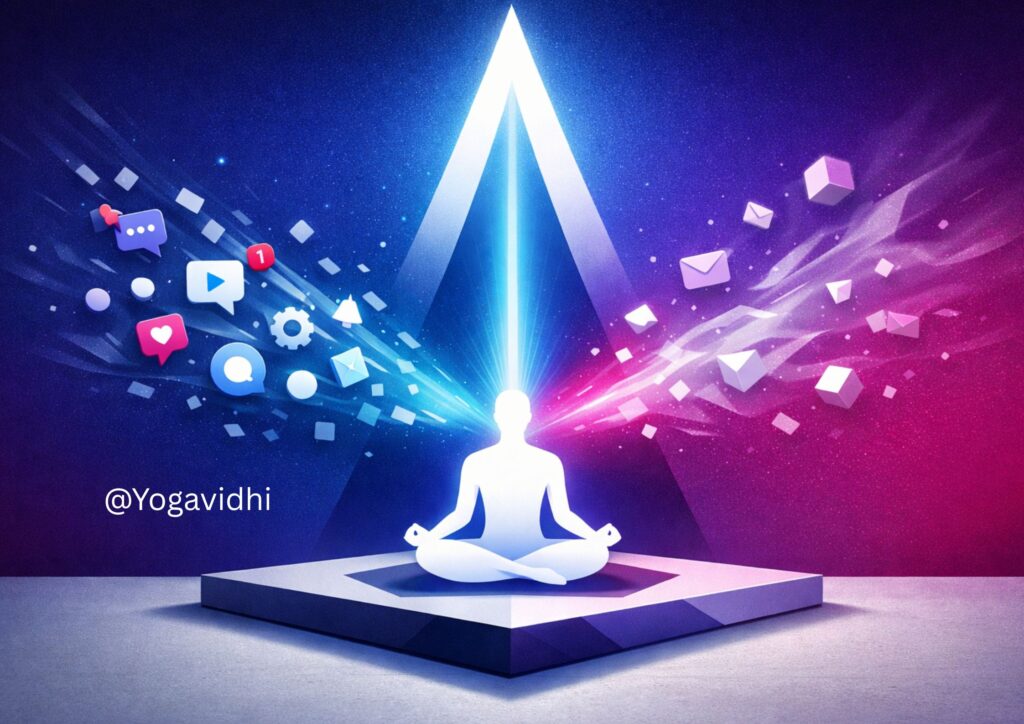

In today’s fast-paced digital age, maintaining focus feels like a constant battle. Notifications, multitasking, and endless information overload leave our minds scattered and restless. This is where Dharana Yoga: The Art of Concentration for Mental Clarity & Inner Balance becomes not just relevant, but essential.
Dharana, an ancient yogic practice, teaches us how to train the mind to focus on a single point. It is not just about concentration; it is about reclaiming control over your thoughts, emotions, and inner state. Whether you are a student, a professional, or someone seeking peace, Dharana Yoga offers a powerful pathway to clarity and balance.
Dharana, commonly understood as concentration or “holding,” is the sixth limb of Patanjali’s Ashtanga Yoga. It acts as an essential link between external practices such as posture, breath control, and sensory withdrawal, and the deeper state of meditation known as Dhyana. It involves directing the mind, like a focused beam of awareness, toward a single point whether internal or external to develop stillness, clarity of thought, and emotional stability.
Table of Contents
What is Dharana Yoga? Understanding Its True Meaning
The word “Dharana” comes from Sanskrit, meaning “to hold” or “to maintain focus.” In yogic philosophy, Dharana refers to the practice of concentrating the mind on a single object, thought, or point of awareness.
According to the Yoga Sutras of Patanjali, Dharana is the sixth limb of Ashtanga Yoga. It acts as a bridge between external practices like posture and breath control, and deeper states like meditation and enlightenment.
In simple terms:
Mastering Dharana is the first real step toward mastering your mind.
The Science Behind Dharana Yoga
Modern science is beginning to validate what ancient yogis understood thousands of years ago. Concentration practices like Dharana have a direct impact on brain function and emotional well-being.
How Dharana Affects the Brain
- Strengthens neural pathways related to attention
- Enhances cognitive performance
- Improves memory and learning ability
Reduces Stress and Anxiety
When you focus on a single point, your mind stops jumping between thoughts. This reduces mental noise and lowers stress levels.
Boosts Neuroplasticity
Dharana encourages the brain to adapt and rewire itself, making it easier to develop positive habits and eliminate negative patterns.
Practicing Dharana Yoga: The Art of Concentration for Mental Clarity & Inner Balance is like giving your brain a daily workout.
Benefits of Dharana Yoga
1. Mental Benefits
- Sharper focus and concentration
- Increased productivity
- Clearer thinking and decision-making
- Reduced mental fatigue
2. Emotional Benefits
- Greater emotional stability
- Reduced anxiety and stress
- Improved patience and resilience
3. Spiritual Benefits
- Deep inner awareness
- Preparation for meditation
- Connection with higher consciousness
With consistent practice, Dharana Yoga transforms not only how you think, but how you experience life.
Powerful Techniques of Dharana Yoga
There are several effective methods to practice Dharana. Each technique helps anchor the mind and reduce distractions.
1. Breath Awareness
Focus your attention on your natural breathing pattern. Observe each inhale and exhale without trying to control it.
2. Trataka (Candle Gazing)
Fix your gaze on a candle flame without blinking. This improves both mental and visual focus.
3. Mantra Concentration
Repeat a word or sound like “Om” silently or aloud. This helps stabilize the mind.
4. Chakra Focus
Concentrate on a specific energy center, such as the Ajna (third eye) chakra.
5. Visualization
Imagine a peaceful image or symbol and hold it in your mind without interruption.
Each of these methods supports Dharana Yoga: The Art of Concentration for Mental Clarity & Inner Balance in a unique way.
| Section | Key Points | Benefits |
| Definition of Dharana Yoga | Focused concentration on a single object, thought, or point | Builds mental discipline and awareness |
| Yogic Context | 6th limb of Ashtanga Yoga from Yoga Sutras | Bridge between physical yoga and meditation |
| Core Purpose | Train the mind to stay steady and focused | Leads to mental clarity and inner balance |
| Scientific Benefits | Improves brain function, attention, and memory | Enhances cognitive performance and reduces stress |
| Mental Benefits | Better focus, clarity, and productivity | Reduces distractions and mental fatigue |
| Emotional Benefits | Stabilizes emotions and reduces anxiety | Promotes calmness and resilience |
| Spiritual Benefits | Deepens self-awareness and mindfulness | Prepares for meditation and higher consciousness |
| Key Techniques | Breath awareness, Trataka, mantra, chakra focus, visualization | Multiple ways to practice concentration |
| Beginner Practice Steps | Quiet place, comfortable posture, choose focus, return attention | Easy and accessible for beginners |
| Common Challenges | Restlessness, inconsistency, discomfort, impatience | Can be overcome with practice and patience |
| Dharana vs Meditation | Dharana = focus, Dhyana = meditation | Foundation for deeper meditation |
| Daily Life Application | Focus at work, mindful living, reduced multitasking | Improves productivity and presence |
| Beginner Tips | Start small, stay consistent, avoid distractions | Helps build a strong foundation |
| Advanced Practices | Longer sessions, visualization, breath integration | Deepens concentration and awareness |
| Precautions | Avoid strain, maintain posture, stay relaxed | Ensures safe and effective practice |
| Overall Impact | Enhances focus, reduces stress, builds inner peace | Transforms mental and emotional well-being |
Read More: Yoga Fitness: The Ultimate Guide to a Stronger, Healthier You
Read More: Self-Love Yoga: Embrace Your True Self Through Movement, Breath & Mindfulness
Step-by-Step Guide to Practicing Dharana
Starting Dharana does not require special skills. It only requires patience and consistency.
Step 1: Choose a Quiet Space
Find a place free from distractions.
Step 2: Sit Comfortably
Use a stable posture like Sukhasana or Padmasana.
Step 3: Select a Focus Point
This could be your breath, a mantra, or an object.
Step 4: Observe Your Mind
When your mind wanders, gently bring it back.
Step 5: Practice Daily
Start with 5 to 10 minutes and gradually increase the duration.
Consistency is the key to mastering Dharana Yoga: The Art of Concentration for Mental Clarity & Inner Balance.
Common Challenges and How to Overcome Them
1. Restless Mind
Your mind will wander. This is normal. The goal is to bring it back without frustration.
2. Lack of Consistency
Set a fixed time daily to build a habit.
3. Physical Discomfort
Use cushions or supportive seating to stay comfortable.
4. Impatience
Results take time. Stay committed to the process.
Dharana is not about perfection. It is about persistence.
Dharana vs Meditation: What’s the Difference?
Many people confuse Dharana with meditation, but they are not the same.
- Dharana is the practice of focusing the mind
- Dhyana is the state of continuous meditation
- Samadhi is complete absorption
Think of Dharana as the training phase. Once the mind becomes steady, it naturally flows into meditation.
Applying Dharana in Daily Life
Dharana is not limited to yoga practice. It can transform your everyday life.
At Work
- Focus on one task at a time
- Avoid multitasking
- Improve productivity
In Studies
- Enhance memory retention
- Improve concentration during learning
In Daily Activities
- Practice mindful eating
- Stay present in conversations
- Reduce digital distractions
Living with awareness is the essence of Dharana Yoga: The Art of Concentration for Mental Clarity & Inner Balance.
Tips for Beginners
- Start small with 5 to 10 minutes daily
- Practice at the same time each day
- Use guided sessions if needed
- Be patient with your progress
- Avoid distractions during practice
Remember, even a few minutes of focused attention can create powerful changes.
Advanced Dharana Practices
Once you build a strong foundation, you can deepen your practice.
Longer Focus Sessions
Gradually increase your practice time to 20 to 30 minutes.
Complex Visualizations
Focus on detailed mental images or symbolic patterns.
Integration with Pranayama
Combine breath control with concentration techniques.
Silent Awareness
Move beyond objects and focus on pure awareness itself.
Advanced practice unlocks deeper levels of Dharana Yoga: The Art of Concentration for Mental Clarity & Inner Balance.
Precautions and Best Practices
- Do not strain your mind or body
- Maintain a comfortable posture
- Practice in a calm environment
- Stay consistent without overdoing it
- Seek guidance if needed
Dharana should feel natural, not forced.
Conclusion: Transform Your Mind with Dharana Yoga
In a world full of distractions, the ability to focus is a superpower. Dharana Yoga: The Art of Concentration for Mental Clarity & Inner Balance offers a simple yet profound way to develop that power.
By practicing Dharana regularly, you can:
- Gain control over your thoughts
- Reduce stress and anxiety
- Improve productivity and clarity
- Experience inner peace and balance
The journey begins with a single moment of focus. Start today, and gradually, you will notice a shift not only in your mind, but in your entire life.
FAQ:
Q. What is Dharana Yoga?
Ans: Dharana Yoga is the practice of focused concentration on a single point, object, or thought. It is a key step in developing mental clarity and inner balance, helping train the mind to stay steady and free from distractions.
Q. How is Dharana different from meditation?
Ans: Dharana is the act of concentrating the mind on one object, while meditation (Dhyana) is a continuous, uninterrupted flow of that focus. In simple terms, Dharana is the preparation stage that leads to deeper meditation.
Q. What are the main benefits of practicing Dharana Yoga?
Ans: Practicing Dharana Yoga: The Art of Concentration for Mental Clarity & Inner Balance improves focus, reduces stress, enhances emotional stability, boosts productivity, and prepares the mind for meditation and self-awareness.
Q. How long should beginners practice Dharana daily?
Ans: Beginners can start with 5 to 10 minutes daily and gradually increase the duration as their concentration improves. Consistency is more important than practicing for long hours.
Q. What are the best techniques for practicing Dharana Yoga?
Ans: Some of the most effective techniques include breath awareness, Trataka (candle gazing), mantra repetition, chakra focus, and visualization. These methods help anchor the mind and improve concentration over time.
Q. What is the concept of Dharana in yoga?
Ans: Dharana, the sixth limb of yoga in Patanjali’s Ashtanga system, refers to the practice of deep concentration, where the mind is steadily focused on a single point or object—either internal, such as the breath or a chakra, or external, like an image or a candle flame—to achieve mental stillness. It involves a conscious and repeated effort to keep the mind anchored to one focus, reducing distractions and preparing the practitioner for meditation (dhyana).
Q. Does Dharana improve concentration?
Ans: Dharana is the practice of focused concentration, a powerful technique that sharpens the mind and enhances every dimension of yoga. By developing steady awareness, we improve our ability to remain present, disciplined and calm both during practice and in daily life.
Declaration Note:
We use third-party videos and images on https://yogavidhi.com/ for educational and illustrative purposes. All rights belong to their respective owners. No copyright infringement is intended.