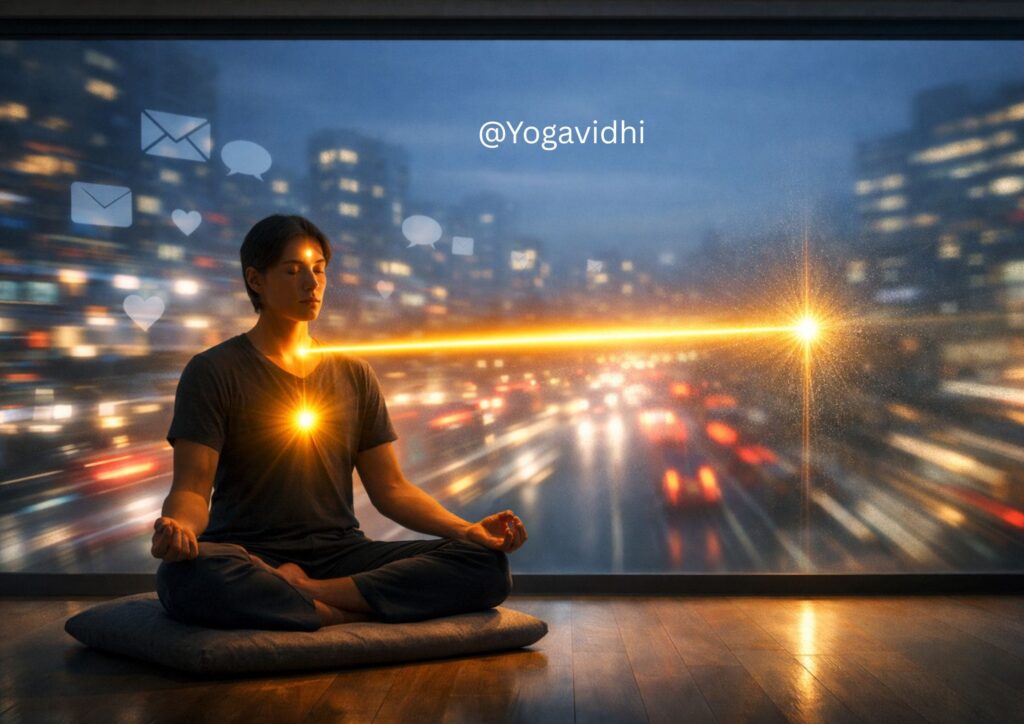

In a world filled with constant notifications, endless scrolling, and mental overload, the ability to focus deeply on one thing has become rare. Many people struggle with distractions, scattered thoughts, and mental fatigue. This is where the ancient yogic practice of Dharana becomes incredibly valuable.
The Beginner’s Journey to Dharana: How to Train Your Mind for Single-Pointed Awareness is about learning how to cultivate deep concentration and mental clarity. Dharana is a powerful yogic technique that trains the mind to remain steady on a single object, thought, or sensation. Over time, this practice improves focus, strengthens mindfulness, and prepares the mind for deeper meditation.
In this guide, you will explore what Dharana is, why it matters, and how beginners can practice it step by step. By the end of this article, you will understand how to build a consistent practice that enhances mental clarity, emotional balance, and inner peace.
Dharana, the sixth limb of Ashtanga Yoga, refers to the practice of deep concentration or single-pointed awareness (ekagra). It involves focusing the mind on one particular object, thought, or point, such as the breath, a mantra, or a candle flame, and maintaining that focus steadily to create a continuous and unbroken stream of awareness.
Table of Contents
Understanding Dharana in Yoga Philosophy
To begin the Beginner’s Journey to Dharana: How to Train Your Mind for Single-Pointed Awareness, it is important to understand what Dharana actually means.
In yogic philosophy, Dharana refers to the practice of concentration or focused attention. It involves directing the mind toward a single point and maintaining that focus without distraction.
Dharana is considered the sixth limb of the Eight Limbs of Yoga, a system that outlines the path to mental and spiritual development. These eight limbs guide practitioners from external discipline to deep meditation and ultimately self-realization.
In simple terms:
Dharana acts as the bridge between everyday awareness and meditation. Without concentration, meditation becomes difficult. That is why developing Dharana is essential for anyone interested in mindfulness, yoga meditation, or mental clarity.
For beginners, Dharana is not about forcing the mind to be perfectly still. Instead, it is about training the mind gently and consistently.
Why Beginners Should Practice Dharana
Many people assume that meditation requires an empty mind. However, beginners often find this unrealistic. The Beginner’s Journey to Dharana: How to Train Your Mind for Single-Pointed Awareness offers a practical way to start.
Practicing Dharana regularly can transform how the mind functions.
Improved Focus and Concentration
One of the most powerful benefits of Dharana is its ability to improve mental focus. In today’s multitasking culture, attention is constantly divided. It helps rebuild the mind’s natural ability to concentrate deeply.
Reduced Stress and Anxiety
When the mind constantly jumps between thoughts, stress levels increase. Dharana trains the brain to slow down and stay present, which can significantly reduce anxiety.
Enhanced Mindfulness
Practicing Dharana naturally improves mindfulness. You become more aware of your thoughts, emotions, and surroundings without being overwhelmed by them.
Better Emotional Balance
Consistent concentration practice strengthens emotional stability. Instead of reacting impulsively, you develop the ability to respond calmly and thoughtfully.
Stronger Meditation Practice
Dharana prepares the mind for deeper meditation. Once concentration becomes stable, meditation begins to flow naturally.
The Science Behind Concentration and Dharana
Although Dharana originated thousands of years ago, modern science supports many of its benefits.
Researchers studying mindfulness meditation and concentration techniques have discovered that focused attention can change how the brain functions.
Improved Brain Function
Practicing concentration strengthens the prefrontal cortex, the part of the brain responsible for decision making, focus, and self-control.
Reduced Stress Hormones
Focused breathing and mindful attention help lower cortisol levels. Lower cortisol means less stress and better emotional regulation.
Enhanced Cognitive Performance
Studies show that people who regularly practice meditation and concentration exercises often experience:
- Better memory
- Increased attention span
- Improved learning ability
These findings highlight why the Beginner’s Journey to Dharana: How to Train Your Mind for Single-Pointed Awareness is not only a spiritual practice but also a practical mental training tool.
Preparing for Dharana Practice
Before starting Dharana, creating the right conditions can make a big difference. Preparation helps the mind settle more easily.
Creating a Quiet Space
Choose a peaceful environment where interruptions are minimal. This could be a quiet room, a meditation corner, or a calm outdoor space.
The goal is not perfection but reducing distractions.
Choosing the Right Time
Early morning is often considered the best time for concentration practices. The mind is naturally calmer before daily activities begin.
Evening sessions can also work well for releasing mental stress from the day.
Comfortable Posture
A stable and comfortable posture supports concentration.
You can sit in:
- Cross-legged position
- Lotus pose
- A straight-backed chair
Keep the spine upright and the body relaxed. Physical comfort allows the mind to focus more easily.
Controlled Breathing
Slow and natural breathing helps calm the nervous system. Before starting Dharana, take a few deep breaths to relax the body.
Read More: Laughing Yoga: Meaning, Benefits, Techniques, and the Science of Healing Through Laughter
Read More: Energy Control in Yoga: Meaning, Techniques, Benefits, and the Science of Mastering Prana
| Section | Key Concept | Description |
| Meaning of Dharana | Yogic Concentration | Dharana is the practice of focusing the mind on a single point to develop deep concentration and awareness. |
| Place in Yoga Philosophy | Sixth Limb of Yoga | Dharana is the sixth stage of the Eight Limbs of Yoga and acts as a bridge between mindfulness and meditation. |
| Purpose of Dharana | Single-Pointed Awareness | The goal of Dharana is to train the mind to remain steady and focused without distractions. |
| Breath Awareness Technique | Focus on Breathing | Observing the natural flow of breath helps calm the mind and improve concentration. |
| Trataka (Candle Gazing) | Visual Concentration | Staring gently at a candle flame trains the eyes and mind to remain focused. |
| Mantra Concentration | Sound-Based Focus | Repeating a mantra helps anchor the mind and prevent wandering thoughts. |
| Visualization Practice | Mental Imagery | Focusing on an internal image such as light or a peaceful scene enhances concentration. |
| Body Awareness | Mind-Body Focus | Directing attention to body sensations increases mindfulness and presence. |
| Common Challenges | Wandering Thoughts | Beginners often struggle with distractions and impatience during practice. |
| Mental Benefits | Improved Focus | Regular Dharana practice strengthens attention span and mental clarity. |
| Emotional Benefits | Stress Reduction | Concentration practices calm the nervous system and reduce anxiety. |
| Long-Term Benefits | Meditation Readiness | Dharana prepares the mind for deeper meditation and spiritual growth. |
| Everyday Application | Mindful Living | Dharana can be applied to daily tasks like studying, working, and conversations. |
Beginner-Friendly Dharana Techniques
The Beginner’s Journey to this includes several simple techniques that help develop concentration.
Different techniques work for different people, so beginners can experiment and discover what feels most natural.
Breath Awareness
Breath awareness is one of the easiest ways to practice Dharana.
Simply observe your breathing without trying to change it. Focus on the sensation of air entering and leaving the body.
Whenever the mind wanders, gently return your attention to the breath.
This practice strengthens mindfulness and mental stability.
Candle Gazing (Trataka)
Trataka is a traditional yogic concentration technique.
Place a candle in front of you and gaze steadily at the flame without blinking excessively. The flame becomes the object of focus.
This method improves visual concentration and mental clarity.
Mantra Concentration
Repeating a mantra helps anchor the mind.
A mantra can be a simple word, sound, or phrase repeated silently. The repetition creates a rhythm that stabilizes attention.
Mantra meditation is widely used in many yoga traditions.
Visualization
Visualization involves focusing on a mental image such as a glowing light, a peaceful scene, or a spiritual symbol.
The goal is to keep the mind steadily connected to the chosen image.
Body Awareness
Another effective technique involves focusing attention on specific sensations in the body.
For example, you can concentrate on the feeling of your hands, heartbeat, or the rise and fall of the chest.
This method strengthens mind-body awareness.
Step-by-Step Guide to Practicing Dharana
Starting Dharana does not require complex preparation. A simple routine can help beginners develop consistent focus.
Step 1: Choose a Quiet Place
Find a calm environment where you can sit comfortably without interruption.
Step 2: Sit in a Stable Posture
Keep your spine straight and relax your shoulders.
Step 3: Close Your Eyes and Relax
Take a few slow breaths to release tension.
Step 4: Select a Focus Point
Choose an object such as the breath, a mantra, or a candle flame.
Step 5: Maintain Gentle Attention
Keep your awareness on the chosen focus point.
Step 6: Bring the Mind Back When It Wanders
Distractions are natural. Simply return your attention without frustration.
Practicing this routine daily helps strengthen concentration gradually.
Common Challenges Beginners Face
During the Beginner’s Journey to Dharana: How to Train Your Mind for Single-Pointed Awareness, many people encounter similar challenges.
Understanding these obstacles helps beginners stay motivated.
Wandering Thoughts
The mind naturally produces thoughts. Instead of fighting them, acknowledge them and gently refocus.
Impatience
Many beginners expect instant results. Concentration improves slowly with regular practice.
Physical Discomfort
If sitting becomes uncomfortable, adjust your posture or use cushions for support.
Difficulty Staying Consistent
Building a routine can be challenging at first. Even short daily sessions are beneficial.
Benefits of Regular Dharana Practice
Consistent Dharana practice can bring profound changes to mental and emotional well-being.
Sharper Concentration
The mind becomes more capable of sustained attention, which improves work and study performance.
Emotional Stability
Regular practice helps reduce emotional reactivity and supports inner balance.
Reduced Mental Fatigue
Focusing on a single point allows the brain to rest from constant stimulation.
Greater Mindfulness
You become more present and aware in daily life.
Deeper Meditation Experiences
As concentration improves, meditation naturally deepens into a more effortless state.
Practicing Dharana in Everyday Life
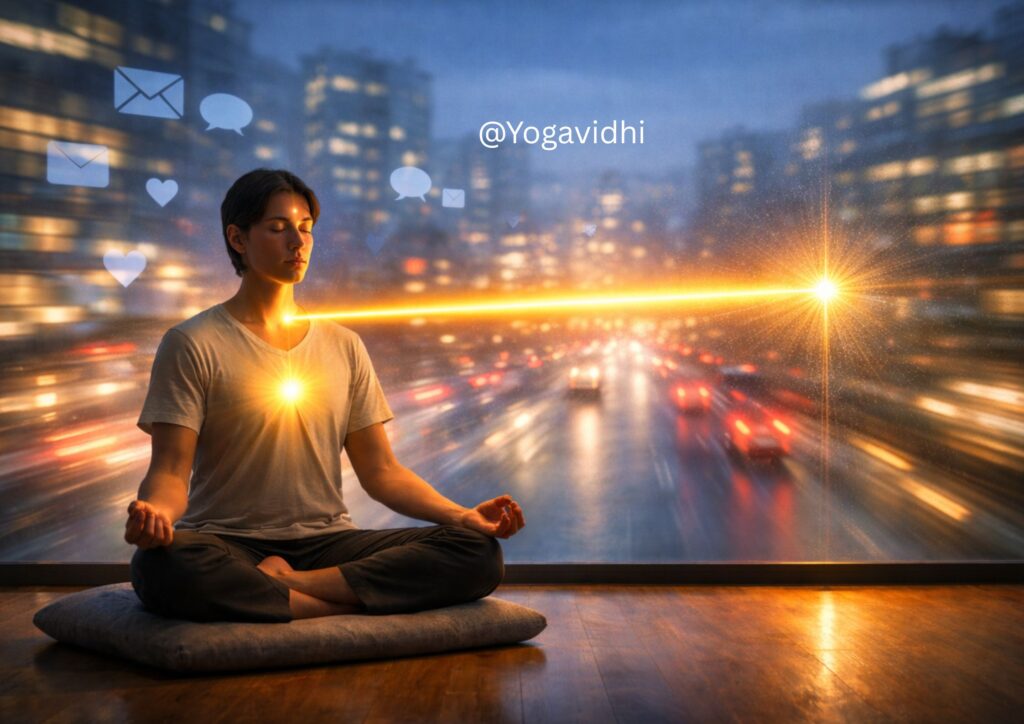
Dharana is not limited to formal meditation sessions. It can be applied throughout daily activities.
For example:
- Focus completely while reading a book
- Give full attention during conversations
- Practice mindful eating without distractions
- Concentrate on one task at a time
These simple habits reinforce the principles of the Beginner’s Journey to Dharana: How to Train Your Mind for Single-Pointed Awareness.
Tips for Building a Consistent Dharana Practice
Developing concentration requires patience and discipline. These tips can help beginners stay consistent.
Start Small
Begin with 5 to 10 minutes daily and gradually increase the duration.
Create a Routine
Practicing at the same time each day helps build a habit.
Use Guided Meditation
Guided sessions can help beginners maintain focus more easily.
Track Your Progress
Keeping a meditation journal allows you to observe improvements in concentration and mental clarity.
Dharana vs Meditation: Understanding the Difference
Many people confuse Dharana with meditation, but they are slightly different stages.
Dharana involves deliberate concentration on a chosen object.
Meditation, or Dhyana, occurs when concentration becomes continuous and effortless.
In other words, Dharana is the training stage, while meditation is the natural outcome of sustained focus.
Understanding this progression helps beginners remain patient during practice.
Safety and Mindfulness Considerations
While Dharana is generally safe, beginners should approach the practice with balance.
Avoid forcing concentration or creating mental tension.
If you feel overwhelmed, simply return to relaxed breathing and allow the mind to settle naturally.
Learning from experienced yoga teachers or meditation guides can also enhance your practice.
Conclusion: Beginning Your Journey Toward Focused Awareness
The Beginner’s Journey to Dharana: How to Train Your Mind for Single-Pointed Awareness is more than just a meditation technique. It is a transformative process that strengthens concentration, deepens mindfulness, and cultivates inner peace.
In a world filled with distractions, the ability to focus on a single point is a powerful skill. Dharana teaches us that the mind can be trained, refined, and guided toward clarity.
By practicing regularly, even for a few minutes each day, you can gradually develop a calm and steady mind.
Over time, Dharana opens the door to deeper meditation, emotional balance, and a more mindful way of living.
The journey begins with a single moment of attention. And with patience and dedication, that moment can grow into lasting awareness and inner harmony.
Frequently Asked Questions (FAQ):
Q. What is Dharana in yoga?
Ans: Dharana is a yogic concentration practice that involves focusing the mind on a single object, thought, or sensation. It is the sixth limb of the Eight Limbs of Yoga and helps develop single-pointed awareness, mental clarity, and mindfulness. Dharana is an essential step that prepares the mind for deeper meditation.
Q. How can beginners start practicing Dharana?
Ans: Beginners can start the Beginner’s Journey to Dharana: How to Train Your Mind for Single-Pointed Awareness by practicing simple concentration techniques such as focusing on the breath, repeating a mantra, or gazing at a candle flame. Start with short sessions of about 5 to 10 minutes daily and gradually increase the duration as concentration improves.
Q. What are the benefits of practicing Dharana regularly?
Ans: Regular Dharana practice offers many benefits, including improved focus, reduced stress, enhanced mindfulness, better emotional balance, and stronger mental clarity. It also helps prepare the mind for meditation and promotes a calmer, more balanced state of awareness.
Q. What is the difference between Dharana and meditation?
Ans: Dharana refers to focused concentration on a single point, while meditation (Dhyana) is a deeper state where concentration flows continuously without effort. In simple terms, Dharana trains the mind to focus, and meditation naturally develops once concentration becomes stable.
Q. How long should a Dharana practice session last for beginners?
Ans: For beginners, Dharana practice sessions can start with 5 to 10 minutes daily. As concentration improves, the duration can gradually increase to 15 or 20 minutes. Consistency is more important than length, so practicing regularly is the key to developing single-pointed awareness.
Q. How to get one pointed mind?
Ans: To develop concentration and achieve one pointed awareness, you must put in some effort. Focus your mind on the Lord and keep all other thoughts away from your mind. With continuous practice like this, your awareness will gradually become steady on the Lord who resides in your heart.
Q. How to develop dharana?
Ans: Dharana practice begins by sitting comfortably in a quiet and peaceful place. If you are focusing internally, keep your eyes closed and concentrate on a chosen object such as a mantra or a chakra. If you prefer to keep your eyes open, direct your attention toward an external object.
Declaration Note:
We use third-party videos and images on https://yogavidhi.com/ for educational and illustrative purposes. All rights belong to their respective owners. No copyright infringement is intended.